
Cochlear Implantation
Why Asan Medical Center is the Optimal Choice for Cochlear Implantation
Cochlear implantation is an effective means of hearing rehabilitation for patients who have severe to profound hearing loss who do not benefit from hearing aids. Early detection and intervention for hearing problem, along with advances in hearing aid and speech processing technology, can significantly enhance language perception and learning abilities after cochlear implantation.
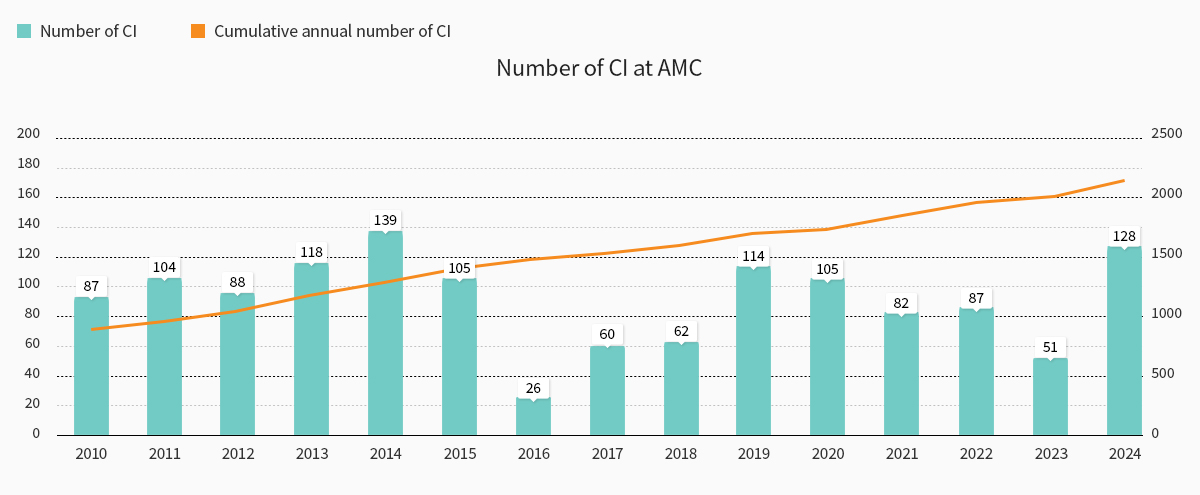
Since its first cochlear implantation in 1999, the Department of Otorhinolaryngology-Head and Neck Surgery at Asan Medical Center (AMC) has performed over 2,000 cochlear implantations, the highest volume recorded by any single medical institution in Korea and abroad. At the Department of Otorhinolaryngology-Head and Neck Surgery at AMC, world-class specialists in hearing loss, cochlear implantation, and middle ear implantation work in close collaboration with a dedicated cochlear rehabilitation team, including experts in audiology and speech therapy. Together, they provide comprehensive care, from external device programming and auditory rehabilitation to ongoing evaluations, with the highest level of expertise.
An intensive and long-term auditory rehabilitation program is necessary to maximize the pre- and post-operative effects of cochlear implants. Therefore, a speech processor mapping and effective auditory and language trainings are essential to help patients hear properly. Post-operative rehabilitation programs are largely divided into cochlear implant mapping, hearing-language rehabilitation course, regular evaluation, and medical follow-up.
Hearing Rehabilitation
Cochlear implant mapping
Cochlear implant mapping is a process of optimal program adjustment to help patients feel comfortable and effectively hear after cochlear implantation. The mapping process involves delivering electric stimulus to the auditory nerves through the internal electrode array, and determining both the softest level of sound a patient can detect (threshold level) and the maximum level that can be heard comfortably (comfort level), which are then programmed into the external speech processor. This mapping program is customized for each individual patient and has a significant impact on their quality of life.
Schedule of cochlear implant mapping
| Timing | Details |
|---|---|
| 3 days to 1~2 weeks after surgery |
|
| Every 2 weeks for 4 weeks (1month) |
|
| 1 month after surgery |
|
| 3, 6, 9 months after surgery |
|
| 1 year after surgery |
|
| Regular follow-up every 6-12 months thereafter |
|
Auditory and language rehabilitation
If hearing loss is detected early, before it causes damage to neural and language development, it can be effectively addressed with auditory assistive devices such as cochlear implants or hearing aids, allowing for normal neural and language development. Even if hearing loss is discovered after the critical period for auditory development, auditory stimulus and training using cochlear implants or hearing aids can still support recovery of neurologic function.
To achieve this, a structured and effective auditory rehabilitation program is essential. This includes assessing the impact of various hearing assistive devices on language and communication skills in both children and adults, and providing individualized intervention and rehabilitation programs tailored to each patient’s needs.
Treatment Outcomes at Asan Medical Center
- 1999 – Performed the first cochlear implantation
- Since 2005 – 80 to 120 cochlear implantation performed annually
- 2012 – Achieved 1,000 cases of cochlear implantation, first in Korea
- 2016 – Introduced auditory cortical response evaluation after cochlear implantation, first in Korea
- 2017 – Opened the Cochlear Implant Clinic to enhance patient convenience and systematic care
- 2018 – Achieved 1,500 cases of cochlear implants, first in Korea
- 2023 – Reached 2,000 cases of cochlear implants, first in Korea