

Transplant Anesthesia
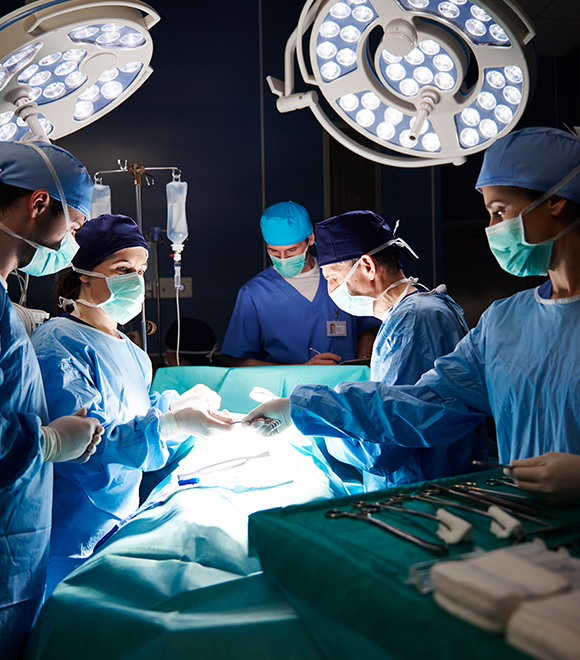
Asan Medical Center performed Korea’s first heart and pancreas transplantations in 1992 and later pioneered living-donor liver transplantation in 1994, becoming a national leader in complex organ transplantation. To date, the hospital has achieved over 9,000 liver transplantations and 7,000 kidney transplantations, representing the highest volumes in the country.
At the core of these achievements lies the expertise and extensive clinical experience of the Department of Anesthesiology and Pain Medicine, which specializes in tailored anesthesia management and perioperative intensive care for transplantation patients. In particular, even in complex cases such as multi-organ transplantation, living donor liver transplantation, and ABO-incompatible transplantation, the department has gained attention and provided training opportunities for both domestic and international medical professionals through stable anesthesia and meticulous hemodynamic management, further enhancing the status of Asan Medical Center as a world-class transplantation center.
The Department of Anesthesiology and Pain Medicine will remain fully committed to advancing patient safety, improving transplantation outcomes, and leading excellence in clinical care, research, and education.
Specialties and Strengths
-
Hemodynamic Monitoring and Echocardiography
The Transplant Anesthesia Team possesses specialized expertise in precisely managing rapid hemodynamic fluctuations that may occur during high-risk surgeries such as liver transplantation and cardiothoracic and vascular surgeries. During surgery, transesophageal echocardiography (TEE) is used to continuously assess structural and functional cardiac changes in real time, while intraoperative hemodynamic monitoring enables continuous observation of circulatory parameters. These techniques allow anesthesiologists to promptly evaluate blood pressure, cardiac output, and preload and afterload conditions, thereby formulating individualized anesthesia strategies optimized for each patient. Such precision monitoring methods are particularly critical in liver or cardiopulmonary transplantation, where massive bleeding and rapid fluid shifts frequently occur, and they play a key role in maximizing patient safety.
-
Coagulation Management and Transfusion Optimization
Because liver transplantation and cardiothoracic surgeries carry a high risk of bleeding and are frequently accompanied by coagulopathy, the Transplant Anesthesia Team utilizes rotational thromboelastometry (ROTEM) to continuously assess patients’ coagulation status in real time. This allows objective, data-driven decisions regarding the need for transfusion and the selection of blood products, reducing unnecessary transfusions and optimizing blood component utilization. This approach reduces bleeding complications and promotes postoperative recovery while contributing to improved long-term patient survival. In addition, the team continuously publishes research on transfusion management strategies, leading the establishment of both domestic and international standards in patient blood management for transplantation patients.
-
High-Risk Patient Management and Clinical Research
Building on its extensive experience with ultra–high-risk patients, including multiorgan transplantation, ABO-incompatible transplantation, and patients with compromised cardiopulmonary function, the Transplant Anesthesia Team has established a comprehensive set of critical care protocols. The team operates a comprehensive perioperative management system that encompasses not only intraoperative hemodynamic and coagulation control but also coordinated postoperative intensive care, achieving outstanding survival rates and treatment outcomes.
Furthermore, this extensive clinical experience has led to active research, resulting in numerous publications in leading international journals and the establishment of new standards for anesthesia in liver and cardiothoracic transplantation. In particular, research on hemodynamic optimization, transfusion strategies, and the latest applications of anesthetic agents has contributed to expanding both academic and clinical influence in the field of transplant anesthesia worldwide.
Research and Policy Activities
-
Academic Research and International Publications
The Transplant Anesthesia Team actively conducts diverse studies on hemodynamic optimization, coagulation management, transfusion strategies, and the application of anesthetic agents in high-risk surgical patients undergoing liver, cardiothoracic, or multiorgan transplantation. In particular, through studies integrating transesophageal echocardiography (TEE) with hemodynamic monitoring, the team has identified intraoperative cardiovascular functional changes and their prognostic implications, while research on coagulation management using ROTEM has contributed to establishing patient-specific transfusion guidelines. These research outcomes have been consistently published in leading international journals, helping to define clinical standards in the field of transplant anesthesia.
-
Academic and Educational Activities
The Transplant Anesthesia Team is actively engaged in the Korean Society of Transplantation Anesthesiologists and the Society of Advancement in Transplant Anesthesia, sharing the latest knowledge and clinical experience through regular academic conferences and workshops. The team also provides structured training for residents and fellows in echocardiography, hemodynamic-based anesthesia management, and practical coagulation management, striving to nurture the next generation of specialists. In addition, the team participates in joint academic programs and provides clinical consultation services in collaboration with other institutions.
Education and Collaboration
The Transplant Anesthesia Team collaborates with domestic and international medical institutions and academic organizations to conduct a wide range of clinical trials and joint research projects. Research on hemodynamic and coagulation management in high-risk transplantation patients has expanded into interdisciplinary studies involving biomedical engineering, physiology, and critical care medicine, contributing to the clinical validation of advanced anesthesia equipment and monitoring technologies. In addition, the team actively shares its accumulated expertise through academic societies, conferences, and workshops, while carrying out educational initiatives aimed at fostering the next generation of specialists in transplant anesthesia.
Vision
Building on one of the world’s largest volumes of clinical experience and research achievements, the Transplant Anesthesia Team at the Department of Anesthesiology and Pain Medicine is advancing personalized anesthesia strategies that maximize patient safety and clinical outcomes. By integrating research in echocardiography, hemodynamic monitoring, and coagulation management, the team has introduced a new paradigm for high-risk patient care, further strengthening its leadership in both academic and clinical practice on a global scale. Looking ahead, the team will continue to expand its multifaceted leadership across clinical practice, research, and policy contributions to achieve its goals of patient-centered precision anesthesia, minimized postoperative complications, and improved long-term survival.